
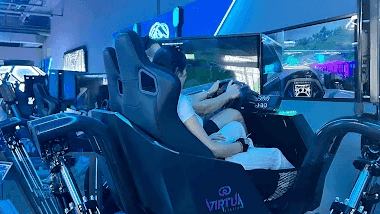
A clear explanation of six-degree-of-freedom motion platforms and how pitch, roll, yaw, surge, sway and heave affect immersion.
Understanding six degrees of freedom
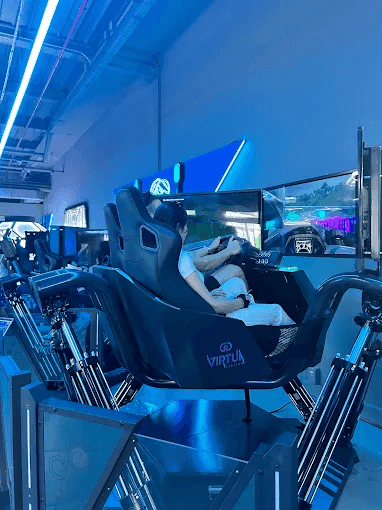
A 6 DOF racing simulator moves in six directions: pitch, roll, yaw, surge, sway and heave. Together, these movements help simulate braking, turning, acceleration, road texture and elevation changes.
Compared with static simulators, a 6 DOF system can deliver stronger physical feedback and a more convincing sense of vehicle movement.
What the driver feels
Pitch can simulate braking and acceleration. Roll helps communicate body movement through corners. Yaw adds rotation cues, while surge, sway and heave add forward, sideways and vertical motion.
The goal is not to copy every real-world force perfectly. The goal is to send enough physical information to make the driving experience more believable and exciting.
Best use cases
6 DOF simulators are suitable for premium racing centers, esports venues, training rooms, automotive brand activations and attractions that need a strong wow factor.
Operators should evaluate ceiling height, floor loading, safety space, maintenance access and staff training before choosing a full-motion platform.
Related media from this article
Prepared and reviewed by Wehop Editorial Team
Wehop manufactures amusement equipment, so product references may describe Wehop systems. Technical scope, certificates and commercial assumptions should be verified for each project.
Racing simulator planning resources
Continue from market research to equipment selection, project examples and a commercial simulator configuration.
Want a Custom Quote for Your Venue?
Tell us your space, budget and goals — Wehop's engineering team will reply within 24 hours with a tailored proposal.