
Venue planning guide
Flying Theater Design and Layout Requirements
Compare floor area, ceiling height, seat capacity and functional zones before choosing an outdoor container, standard indoor or large dome flying theater system.
Updated June 14, 2026. Values are preliminary planning references.
Space requirements by configuration
These are preliminary product-planning values. Final dimensions must be confirmed from the selected equipment configuration, structural design and local building requirements.
| Configuration | Capacity | Floor area | Clear height | Screen | Best use | Details |
|---|---|---|---|---|---|---|
| Outdoor Container Flying Theater | 6-10 seats | 36 sqm | 4.5 m reference height | 4.5 m, 8 m, 10 m or 12 m dome options | Scenic areas, plazas, events and mobile operation | View Outdoor Container Flying Theater specifications |
| Compact Standard Flying Theater | 16-20 seats | 56-100 sqm | 3.8 m minimum reference | 120-degree curved screen configuration | Malls, FECs and compact indoor venues | View Compact Standard Flying Theater specifications |
| Standard Flying Theater | 24-40 seats | 100-200 sqm | 6 m minimum reference | 180-360-degree dome configuration | Theme parks, museums and tourism venues | View Standard Flying Theater specifications |
| Large Dome Flying Theater | 24 / 32 / 60 / 100 seats | ≥ 200 sqm | 8-20 m reference | 18-24 m naked-eye 3D dome | Destination parks and large cultural tourism projects | View Large Dome Flying Theater specifications |
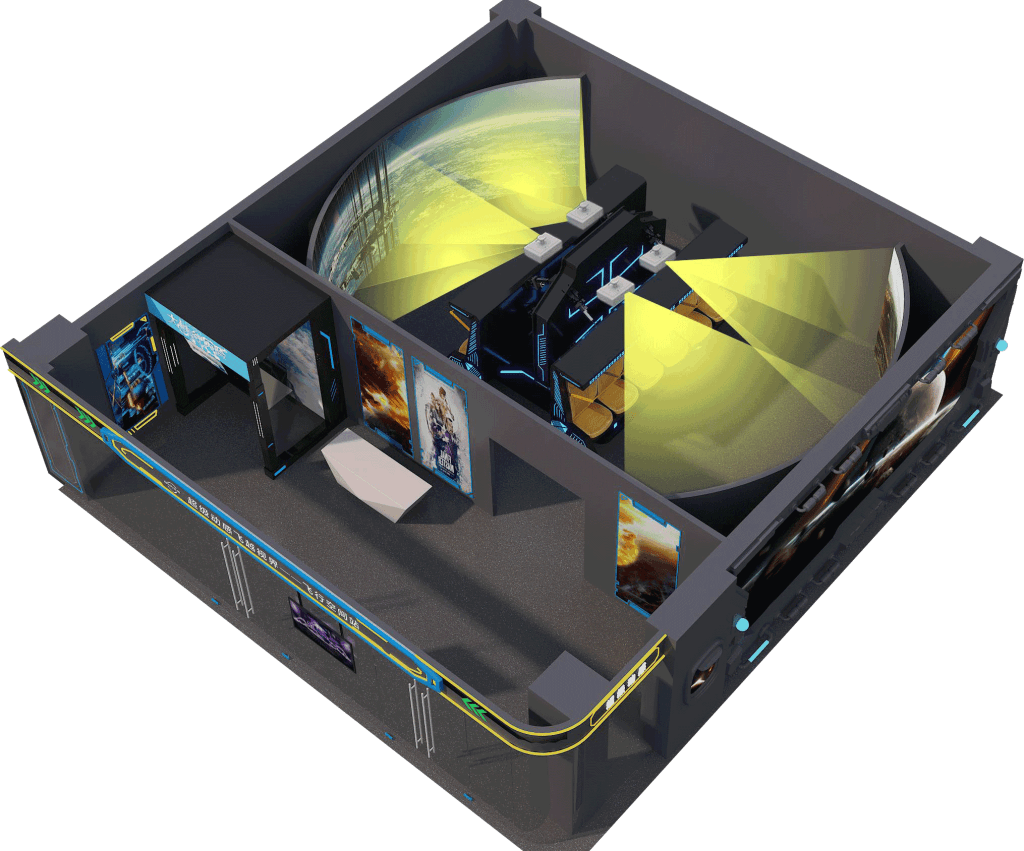
Functional planning
Zones every layout should consider
Entrance and queue
Ticket validation, capacity management, waiting comfort and clear pre-show communication.
Pre-show area
Safety briefing, content introduction and controlled batch formation before boarding.
Loading platform
Safe access to seats, restraint checks, accessible circulation and staff observation points.
Motion and viewing volume
Reserved travel envelope around seats, platform, dome or curved screen and projector sightlines.
Projection and control room
Projectors, media servers, show control, networking and maintenance access.
Equipment and effects room
Electrical cabinets, air or water systems, effect consumables and service clearance.
Exit and unloading
Separate guest discharge where possible to prevent crossover with the next boarding group.
Maintenance access
Routes and removable panels for actuator, seat, projector and control-system service.
Site information required for a layout
Accurate site information reduces redesign, shipping-access problems and installation delays.

From venue drawing to installation plan
Site data review
Check drawings, photos, video, dimensions, access and utility conditions.
Model selection
Match capacity, screen type and motion system to the venue and expected visitor flow.
Concept layout
Define equipment position, guest circulation, technical rooms and maintenance access.
Engineering coordination
Coordinate structure, electrical, HVAC, fire safety, acoustics and local compliance.
Installation planning
Confirm shipping, unloading, lifting, assembly sequence, commissioning and staff training.
Structural loads, fire protection, accessibility, electrical design and local amusement approvals must be reviewed and signed off by qualified professionals in the project jurisdiction.
Planning resources
Continue your flying theater project research
Flying Cinema Solutions
Plan a destination, mall or tourism flying cinema attraction.
Open resourceCommercial Flying Theater Systems
Compare outdoor container, standard indoor and large dome configurations for your venue.
Open resourceFlying Theater Cost Guide
Review equipment price ranges, project costs and quotation scope.
Open resourceInstallation and Turnkey Delivery Guide
Follow the project sequence from site survey and engineering through commissioning and handover.
Open resourceSouth Africa Project Case Study
See a documented project from engineering and shipping through commissioning.
Open resourceFlying theater layout FAQ
How much space is required for a flying theater?
An outdoor container flying theater requires 36 sqm. Compact standard systems require 56-100 sqm, standard systems require 100-200 sqm, and large dome systems require at least 200 sqm depending on capacity and dome size.
What ceiling height does a flying theater need?
Outdoor Container Flying Theater requires a 4.5 m reference ceiling height. Standard Flying Theater configurations require 3.8-6 m depending on the seat layout and screen configuration. Large Dome Flying Theater systems require 8-20 m depending on dome diameter and motion travel.
What information is needed before creating a flying theater layout?
Provide a measured floor plan, clear ceiling height, column and beam locations, doors and loading access, structural information, electrical supply, HVAC and fire-protection conditions, expected visitor flow and target seat count.
Can an existing building be converted into a flying theater?
Yes, if the available dimensions, structure, power, ventilation, fire-safety system and equipment access meet the selected configuration. A site review is required before final engineering approval.
Request a preliminary layout review
Send your measured floor plan, clear height, venue photos, target capacity and country. We will help identify a suitable flying theater configuration and the next engineering steps.