Immersive Entertainment Guide

5 Immersive Motion Cinema Formats: Which Is Right for Your Project?

Immersive attractions are raising audience expectations for what a cinema experience can be. This guide compares five popular formats, from compact 5D motion cinemas to large flying theaters and mobile container installations.

5D and 6D motion cinemas combine moving seats with effects such as mist, scent and vibration to turn a standard screening into a multisensory attraction. Rotating flying theaters add a 360° dome screen and multi-degree-of-freedom seating to recreate the sensation of flight and weightlessness. When paired with wind, rain, thunder and lightning effects, they can create a memorable draw for exhibition venues and visitor attractions.

There is no single best flying theater format. The right choice depends on the site, visitor profile and operating model. This guide compares five options to help you evaluate a flying theater system, a dome theater or a mobile attraction with greater confidence.

5D motion cinema ride with special effects

Immersive ride 001

5D Cinema Immersive Theater

The defining feature of a 5D motion cinema is its synchronized seating. The seats move with the action on screen, while effects such as water spray, scent and vibration help pull guests into the story.

By engaging sight, sound, touch and smell, the attraction delivers a richer experience than conventional cinema and gives guests a clear, easy-to-understand reason to participate.

Application scenarios

5D and 6D motion cinemas work well in shopping malls, tourist attractions, pedestrian streets and other high-traffic destinations. At roughly US$3 per ride, they are well suited to a high-volume, short-session operating model. Their stable structure and straightforward operation also make them a popular choice for customized corporate installations.

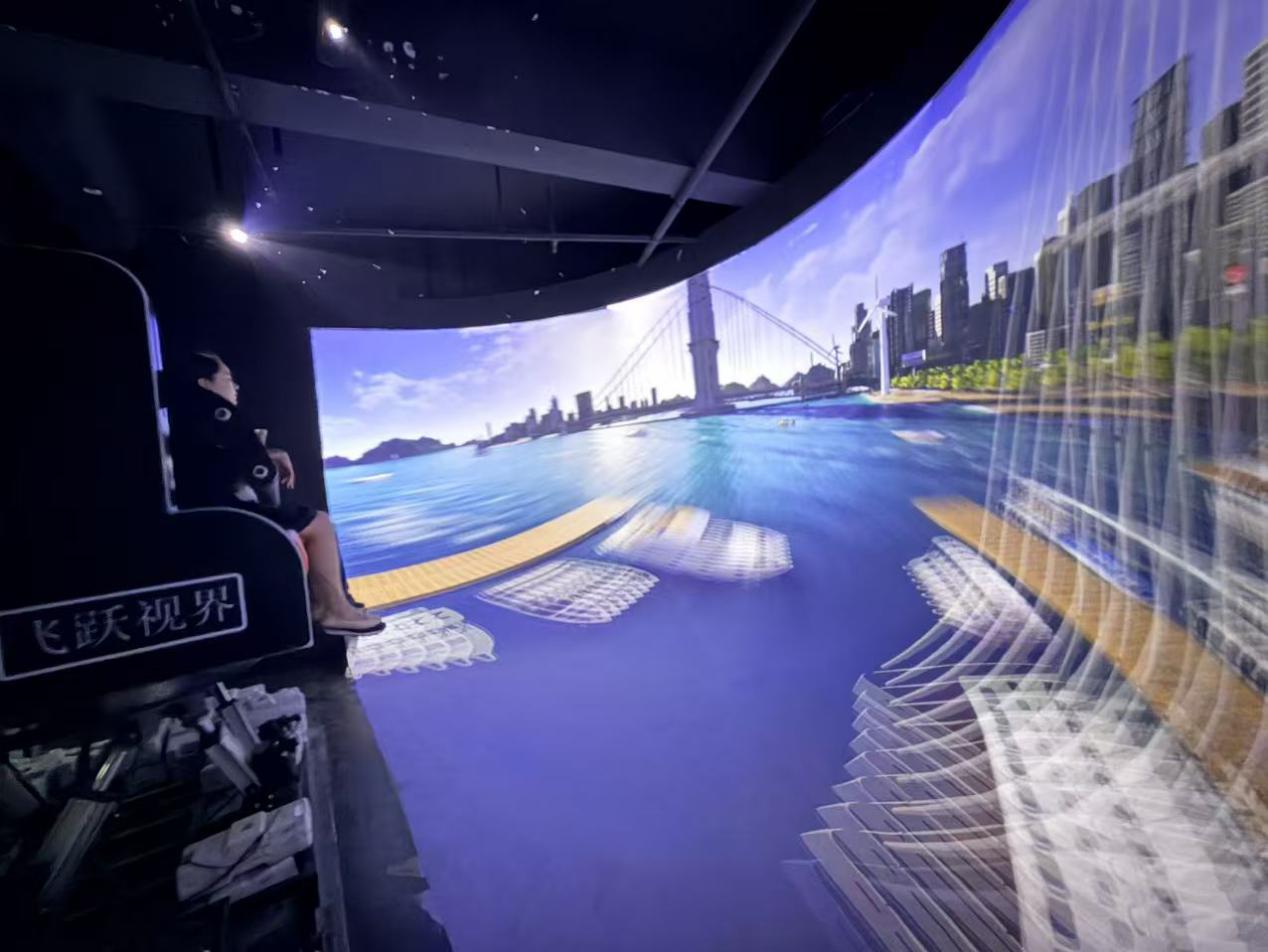
Indoor bowl-screen flying theater projection

Immersive ride 002

Indoor Bowl-Screen Flying Theater

A bowl screen is a form of spatial projection that surrounds the audience with a distinctive, wraparound image. When paired with dynamic 3D content, it creates the feeling of being inside the scene rather than simply watching it.

Like a dome theater, a bowl-screen cinema can create a sense of lift and flight, but it can do so with a lower ceiling requirement. With approximately 3.8 meters of clear height, it fits many existing mall spaces and can also reduce construction costs.

Application scenarios

Bowl-screen flying theaters are a strong fit for theme parks, large retail complexes and family entertainment center upgrades. Their lower height requirement makes them practical for many mall floors, while the immersive visual format gives families a compelling reason to visit.

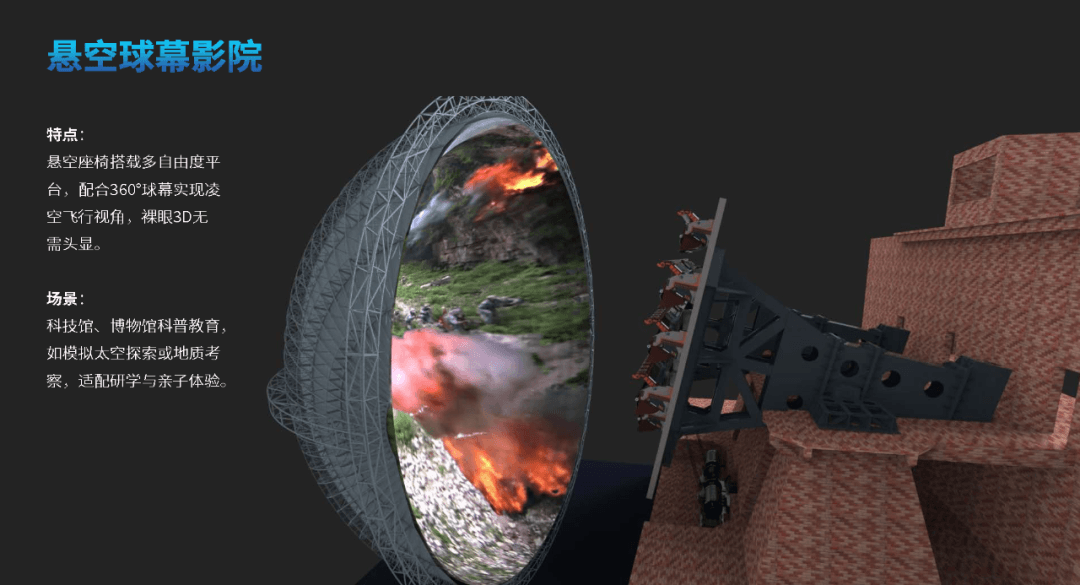
Suspended dome flying theater seating and screen

Immersive ride 003

Indoor Suspended Dome Flying Theater

This format uses suspended seats on a multi-degree-of-freedom platform to create a genuine flying perspective. Guests experience the attraction without a headset, using large-format naked-eye 3D visuals.

A hemispherical or full-dome screen can cover 180° to 360° of the field of view. By removing the hard edges of a flat screen, it creates a seamless panoramic environment with strong visual impact.

Application scenarios

Suspended dome cinemas are particularly effective in science centers, museums and other educational venues. They can turn themes such as space exploration or geological fieldwork into immersive experiences, making them well suited to school groups and family learning programs.

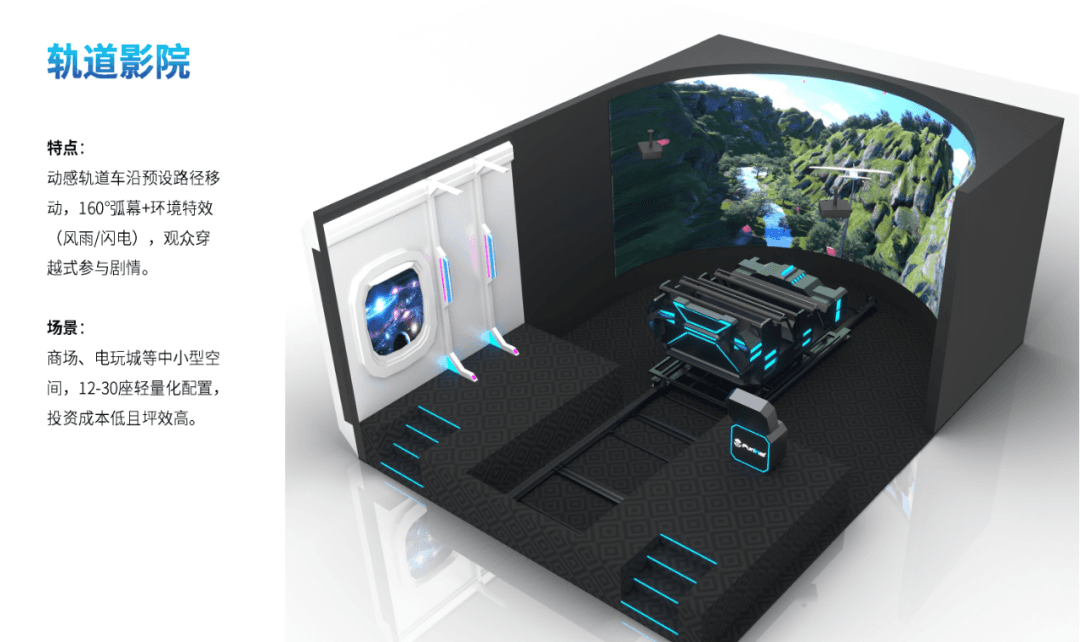
Track cinema motion vehicle and curved screen

Immersive ride 004

Track Cinema

A track cinema moves a motion vehicle along a programmed route to bring guests into the story. A 160° curved screen, together with effects such as wind, rain and lightning, helps make each scene feel active and participatory.

Application scenarios

This format suits small and mid-sized venues such as malls and arcades. Configurations are flexible and typically accommodate 12 to 30 guests. Its lightweight design can keep investment more manageable, although the venue still needs a room length of approximately 10 meters for the track.

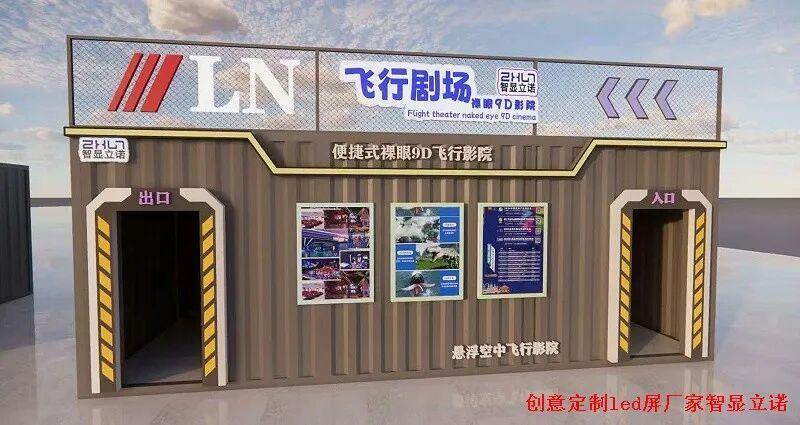
Mobile container flying theater installation

Immersive ride 005

Mobile Container Flying Theater

A mobile container flying theater is designed for flexible operation. The container acts as the attraction enclosure, making the system easier to transport, install and remove than a permanent build. This gives operators a practical way to respond to seasonal demand, holidays and large events.

Advances in projection and audio technology allow container theaters to deliver a high-quality audiovisual experience in a compact, self-contained format. The distinctive setting can be especially appealing to younger visitors looking for an experience that feels different from a standard cinema visit.

Younger consumers are a growing audience in large, mid-sized and smaller cities alike. They increasingly look for entertainment that feels personal, shareable and different. Themed programming—such as outdoor film festivals or movie weeks—can help attract these audiences, encourage participation and support word-of-mouth marketing.

Flexibility is a major part of the container theater's appeal. It can be deployed for music festivals, art exhibitions, outdoor parties and other temporary events, and can also be installed in more remote scenic locations. The experience becomes part of the event environment, not just a film screening.

Application scenarios

1

Location flexibility

A mobile container flying theater can be installed in a city square, on a rural lawn or in another suitable event location. It removes many of the fixed-location limits of a conventional cinema and gives audiences more varied settings in which to enjoy the experience.

2

A self-contained mobile cinema

With integrated projection and audio equipment, the attraction can deliver a high-quality audiovisual experience in an open or temporary setting—an atmosphere that a conventional theater may find difficult to recreate.

3

Reusable by design

As an emerging cinema format, a mobile container theater can support a more resource-conscious approach. Reusable structures and equipment can help reduce the material waste associated with building and operating a permanent theater.

4

Convenient guest technology

Instead of traditional ticket queues and seat finding, mobile container cinemas can use online ticketing to shorten wait times. VR and interactive experiences can also give guests more choice before the screening begins.

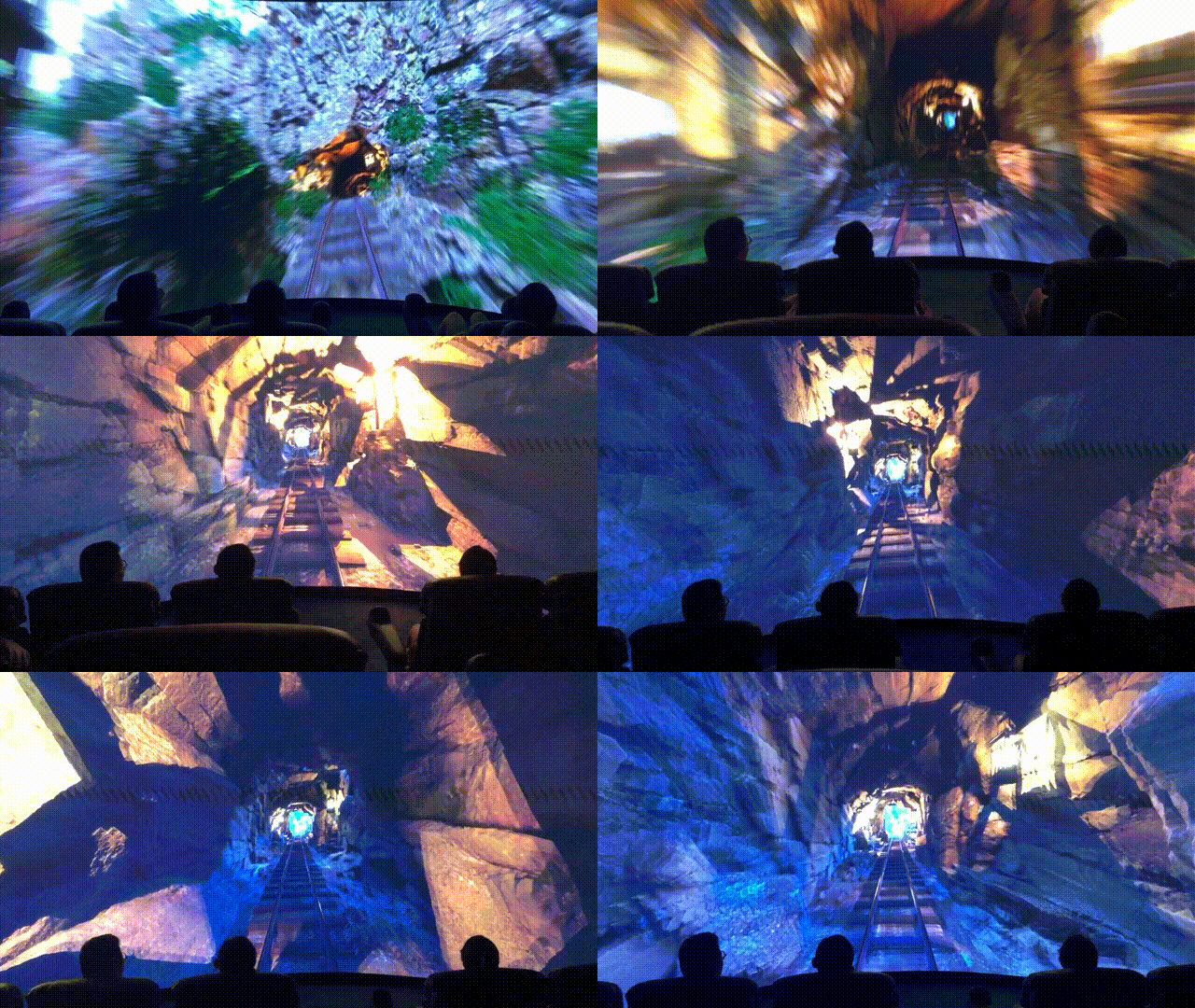
Comparison summary

Which immersive attraction is the best fit for your project?

FormatCore technologyApprox. price per ride (USD)Best fit
5D Motion CinemaSynchronized motion seating + multisensory effectsApprox. US$3.0–4.5Tourist attractions, malls and pop-up experiences
Rotating Flying TheaterMulti-DOF rotation + dome screenApprox. US$7.5–14.9Theme parks and large retail complexes
Suspended Dome CinemaSuspended seating + panoramic dome screenApprox. US$9.0–22.4Science centers and museums
Track CinemaGuided vehicle movement + curved-screen interactionApprox. US$4.5–7.5Malls, arcades and small to mid-sized venues
Mobile Container Flying TheaterModular, transportable theater structureApprox. US$7.5–14.9Outdoor parks, festivals, movie weeks and holiday events

USD figures are planning references, converted at US$1 = RMB 6.70. Actual ticket pricing varies by location, operating costs and local demand.

All five formats are built around the same commercial principle: combine dynamic equipment, large-format visuals and environmental effects to make guests feel part of the experience. That combination can increase dwell time, encourage repeat visits and give cultural-tourism and retail destinations a stronger reason for guests to choose them.

Need help selecting an immersive ride?

Share your venue dimensions and preferred application scenario. Wehop Tech can help compare the flying theater technology, layout and turnkey equipment options.

Contact Wehop Tech
Instant Contact!